

The holiday season, traditionally a showcase for high-production, heartwarming advertising, has collided headfirst with the AI revolution. This year, a seemingly innocuous Coca-Cola commercial, featuring a cheerful Santa and a cast of forest animals in a snowy village, has become an unlikely lightning rod for intense public criticism. The source of the controversy is not the message, but the medium: the ad is predominantly created using artificial intelligence. While the slightly off-kilter, hyper-smooth animals are an easy target for mockery, the visceral public response points to a far deeper and more significant tension. This backlash transcends a single poorly executed commercial and strikes at the core of a fundamental shift in how corporations view creativity, authenticity, and their relationship with consumers.
The Rise of the Algorithmic Ad: AI’s Inevitable March into Marketing
Coca-Cola is far from an outlier in its experimentation. The use of AI in marketing has shifted rapidly from a speculative tool to a central, budgeted strategy. Recent industry surveys, such as the comprehensive Canva Marketing Report, reveal a staggering statistic: 94% of marketing teams now have a dedicated budget for AI tools. The value proposition for corporations is clear and compelling: unprecedented speed, radical cost reduction, and the ability to generate endless variations for A/B testing. What we are witnessing in Coca-Cola’s ad is not an anomaly, but a preview of the new normal. This holiday season and those that follow will be increasingly populated by commercials conceived and crafted not in studios, but in software, as brands race to leverage efficiency at scale.
Deconstructing the Discontent: Why a “Safe” Ad Caused Such a Stir
The content of the ad itself is notably inoffensive a generic, feel-good winter tableau. This very blandness is a crucial part of the problem. The strong negative reaction suggests the public is not merely critiquing aesthetic flaws but is registering a profound intuitive disappointment. The backlash is a reaction to perceived corporate indifference. At a time when consumers increasingly value authenticity and human connection, the use of AI in a flagship holiday campaign is read as a cold, calculated exchange: replacing unique human artistry and craft with automated, cost-cutting generation. It signals that shareholder value and operational efficiency are being prioritized over the intangible soul of creative work and, by extension, over the respect for the audience’s discernment.
A Viewer’s Guide to Spotting AI in Advertising
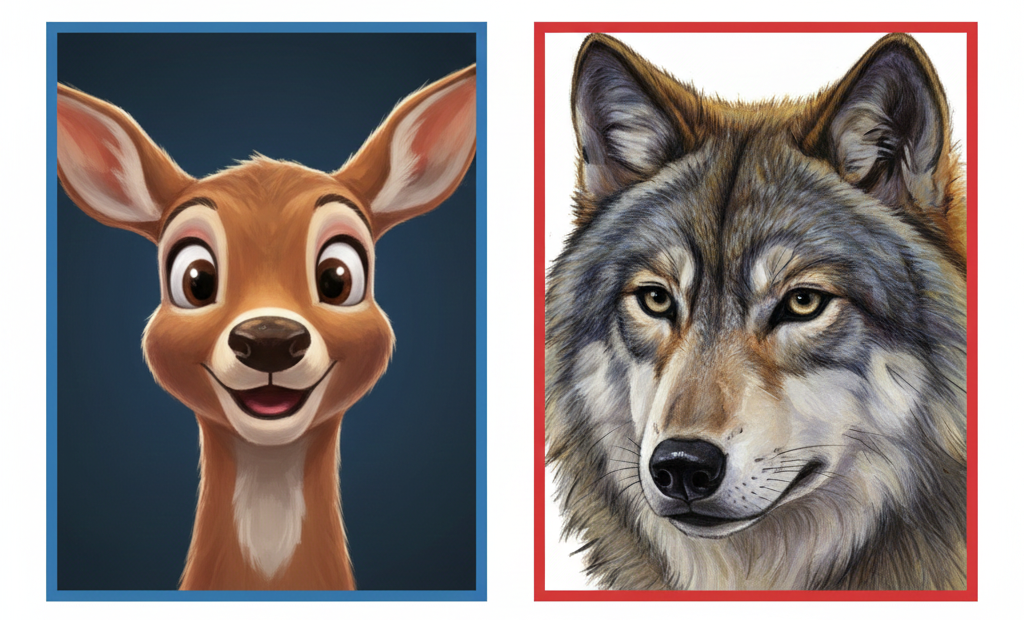
For the average viewer, the signs are becoming more recognizable. Coca-Cola’s ad exhibits classic hallmarks of current-generation AI image generation. The animals, while superficially cute, possess an unnatural uniformity: their fur has a soft, textureless quality, their eyes often lack depth, and their expressions particularly the exaggerated, perfectly circular shape of their mouths—feel like a clichéd interpretation of surprise. Furthermore, behind-the-scenes materials confirmed the process, showing artists using generative AI tools to rapidly cycle through iterations of animal features. These tells, including the slight warping of objects and the lack of nuanced, intentional detail, are the fingerprints of automation.
The Strategic Crossroads: Weighing AI’s Role in Creative Industries
The Coca-Cola incident forces a necessary conversation about the appropriate application of AI in creative fields. The debate is no longer about whether it will be used, but how, when, and with what transparency. The public reaction is a clear market signal.
| Potential Benefits for Corporations | Risks and Consumer Concerns |
|---|---|
| Unmatched Speed & Scale: Rapid generation of concepts, storyboards, and localized ad variations. Significant Cost Reduction: Lower expenses for photography, illustration, and even basic animation. Data-Driven Optimization: Ability to instantly generate and test countless visual styles against engagement metrics. Democratization of Tools: Smaller teams can produce content that was previously cost-prohibitive. | Erosion of Authenticity: Brands risk feeling generic, soulless, and untrustworthy. Devaluation of Creative Professions: Undermines the economic and cultural value of human artists, animators, and designers. Homogenization of Culture: AI trained on existing data may lead to visually derivative, repetitive advertising landscapes. Transparency & Trust Deficit: Lack of clear disclosure fosters consumer skepticism and feeling of manipulation. |
Navigating the Future: A Call for Ethical and Transparent Integration
The public’s rejection of Coca-Cola’s AI ad is not a plea to halt progress. It is a demand for thoughtful integration. The path forward requires a new framework. First, radical transparency. Brands could benefit from openly disclosing the use of AI, framing it as an innovative tool rather than hiding its involvement. Second, ethical application. Using AI for initial brainstorming or background elements is different from using it to replace the entire creative execution. The most resonant work will likely come from a hybrid model where human creative direction and emotional intelligence guide and curate AI-generated assets. Finally, respect for the audience. Consumers are not passive viewers; they are active participants in culture. Dismissing their ability to detect and their right to care about the origin of their media is a strategic misstep.
The Lasting Imprint of a Gingerbread Village
Ultimately, Coca-Cola’s holiday ad may be remembered less for selling soda and more for becoming a cultural case study. It serves as a stark, early warning that in the rush to adopt generative AI, corporations cannot afford to overlook the human element on both sides of the screen—the creators who bring emotion to life and the audiences who crave genuine connection. The lesson for marketers is clear: efficiency without empathy is a recipe for backlash. In the future, the most successful brands will be those that harness AI’s power not to replace creativity, but to augment it, and who communicate that process with honesty and respect.
Explore Steaktek for more updates.

