
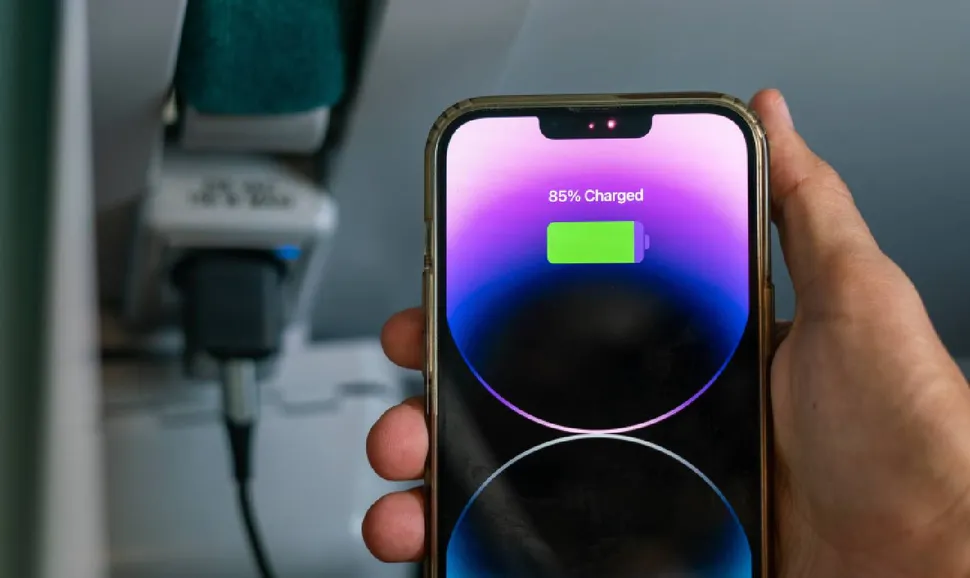
Plugging in your smartphone before bed and waking up to 100% is a responsibility. You ensure most of the battery exists for the day ahead. What could possibly go wrong with that?
Decades of battery technology, that’s it. Lithium-ion cell inside every present day cell phone. Does the iPhone or Android degrade faster to the extreme: full rate (100%) and total decay (0%). Leaving your smartphone sitting at 100% for hours while you sleep accelerates chemical growth. By morning, your battery has lost only a tiny, eternal fraction of its normal capacity.
Do this every night for 2 years, and your “100%” value will be 80% of its unique ability. That’s not a fault. That’s physics. Fortunately, phone manufacturers have built in settings to mechanically prevent this loss. Most humans don’t allow them anyway. Here’s exactly how to reset your charging habits without changing your ordinary.
Why is 100% actually a danger zone
To understand restoration, you need to understand a handy fact: often lithium-ion batteries.
These batteries are happiest at 20% to 80% charge. Within this range, the chemical reactions that hold and project electricity remain stable and green. The internal voltage increases by more than 80%, which accelerates the decomposition of the electrolyte. Below 20%, batteries struggle to maintain robust output, which can induce perpetual crystal formation in cells.
Think of it like a muscle. Pressure is applied by placing it on maximum flex for hours. Resting in a neutral position saves energy over the years. Charging up to 100% every now and then is best you need full variety for travel or long days. But doing it every night is the equivalent of running a marathon every day. Your battery will tire long before the rest of your phone does.
| Charge Range | Impact on Battery Lifespan |
|---|---|
| 30% – 80% | Optimal. Minimum degradation. |
| 80% – 100% | Mean stress. Now and again acceptable. |
| 100% for hours | High pressure for hours. Remarkably accelerates aging. |
| 0% – 20% | Percent high stress. Avoid whenever possible. |
Repair is not what your battery percentage approximately can be paranoia. Restoration involves applying your smartphone’s built-in tools to automate healthy charging.
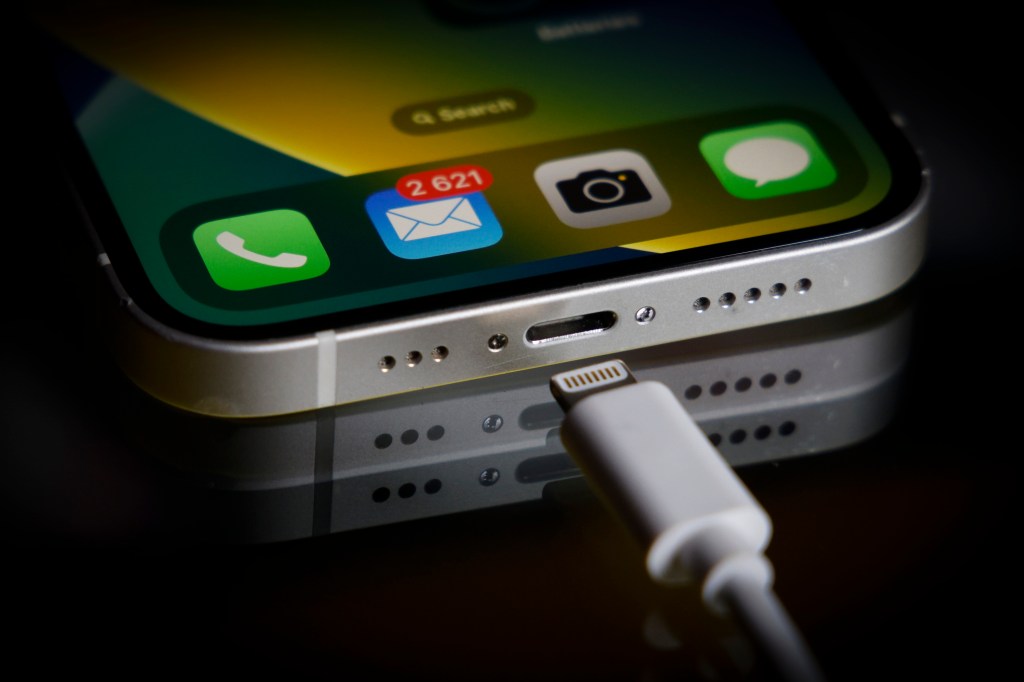
IPhone users: Two settings you must turn on
Apple offered battery safety features over the previous two iOS versions. Most iPhone owners have by no means opened this menu. Here’s exactly where to go.
Step 1: Open Settings → Battery → Charging
Open the Settings app. Tap the battery. Then tap Charging. You’ll see two important options: optimized battery charging and charge limit.
Step 2: Turn On Optimized Battery Charging
Optimized battery charging on Toggle. This trait teaches you to work every day. If you normally wake up at 7:00 am, your iPhone will charge 80% faster, then wait there until about 6:00 before trickle-charging to 100% properly.
Your phone still gets to 100%. But it only lasts for minutes, no longer hours.
Limitation to understand: Optimized charging works high quality for one day predictable. If you charge at a random time during a certain time of day, the function can additionally prevent 80% and stay there as you can’t predict when you will unplug.
Step 3: Set a Charge Limit (Newer iPhones Only)
Under Optimized Battery Charging, you will find Charge Limit on iPhone 15 and new fashions. This makes the unit a hard cap.
The options are: 80%, 85%, 90%, 95%, or 100%.
Select 80% or 85% for maximum long-term battery fitness. The smartphone will certainly hit that restriction and prevent charging, even if left plugged in overnight. You sacrifice around 15–20% of each day to undoubtedly double the overall life of your battery. Choose 80% if you’re near chargers most days. If you want more variety sometimes, choose 90%. If you plan to replace the cell phone within 18 months, choose 100% the most effective.
Android Users: Where to Find Battery Protection
Android manufacturers all offer similar functions, but they use extraordinary names and menus. Here are the most common ones.
Samsung Galaxy Phones
Samsung calls it Protect battery.
- Open Settings
- Tap Battery and device care
- Tap Battery
- Tap more Battery settings (or the 3 dots inside the corner)
- Toggle Protect battery on
Once enabled, your Samsung will in no way cost more than 85% even if left plugged in for days. This is a hard restriction, not a teaching feature. Simple and effective.
Google Pixel Phones
Pixel uses Adaptive Charging.
- Open the Settings
- Tap the Battery
- Tap Adaptive preferences
- Toggle Adaptive Charging on
Like iPhone’s Optimized Charging, Adaptive Charging recognizes your morning alarm or usage patterns. It charges as fast as 80%, then waits for you to get 100% before you normally wake up.
Note: Adaptive Charging works best when you use the alarm. Set an alarm in the morning even if you don’t need it the job uses it to schedule the final payment.
Other Android Brands (OnePlus, Xiaomi, Motorola)
Most different producers include comparable settings. Look in Settings → Battery for any of these phrases:
- Battery protection
- Optimized charging
- Smart charging
- Charging limit
- Battery care
If you can’t locate it, search for “battery” within the settings search bar and look for any options citing rate limits or battery life.
What about overnight charging with these settings enabled?
Here’s the nice element: you don’t want to trade your conduct now.
Even with Optimized Charging (iPhone/Pixel) or Protect Battery (Samsung) enabled, you can plug in earlier than bed and plug in in the morning. The software program handles the rest.
- By price restriction (80–85%): Your phone stops when it reaches that restriction. It’ll sit at a safe voltage all night.
- With adaptive charging: Your phone waits 80%, then tops out at 100% just before you wake up. Spends the least amount of time on the full value.
Both methods dramatically reduce the hours your battery spends within the risk quarter.
Three additional habits that keep battery health
These aren’t mandatory, but they compound the benefits of the settings above.
1. Avoid Extreme Heat
The heat for batteries is worse than any charging habit. While charging now, don’t set off your smartphone in a hot vehicle, next to a window in fleeting daylight, or under a pillow. Even one hour at 95°F (35°C) causes more deterioration than every week of daily use.
2. Do Not Let It Die Completely
0% hates lithium-ion batteries. Plug in when you see 20–30%, not now when the phone forces itself off. A constant complete discharge reduces the capacity completely.
3. Use Slow Charging When Possible
The fast charger (20W–65W) generates additional heat. Using the famous 5W or 10W charger throughout the night is truly healthier for your battery. Save the quick charging when you want a really brief peak-up.
Conclusion: Set It Once and Stop Thinking About It
No need to babysit your battery percentage. Now you don’t want to immediately unplug your smartphone when it hits 80%. You just need to enable the gear that already exists inside your smartphone.
For iPhone users: Go to Settings → Battery → Charging. Turn on optimized battery charging. When you have an iPhone 15 or newer, set the Charge Limit to 80–85%.
For Samsung users: Settings → Battery → More battery settings → Save battery. Turn it on.
For Pixel users: Settings → Battery → Adaptive Options → Adaptive Charging. Turn it on and set your morning alarm.
For every other person: Find your settings for “battery conservation” or “charging restriction”. Enable whatever you set up.
Do this once. Then your phone charges as always. Your battery will last years more, no conduct business required.
Your light call to motion: Now open your settings properly. Know the battery conservation characteristics. Turn it on. Then answer with your cell phone model and whether or not you discovered the 60-seconds down.
Explore Steaktek for more updates.

