
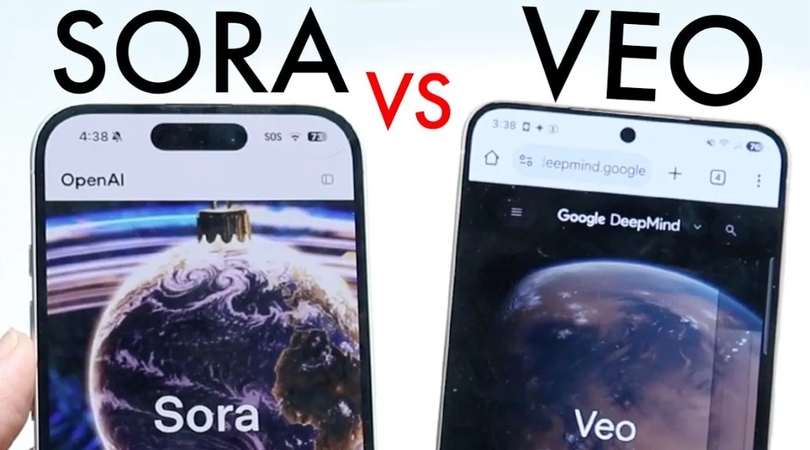
The landscape of creative content is undergoing a seismic shift, powered by the rapid evolution of generative artificial intelligence. In the high-stakes arena of AI video generation, two technological titans, OpenAI and Google, have launched their most advanced public-facing models: Sora 2 and Veo 3. For professionals in marketing, filmmaking, and digital content creation, the pressing question is no longer about feasibility, but about practical superiority. Which platform delivers more consistent quality, greater creative control, and better overall value? This analysis presents the results of a rigorous, side-by-side evaluation, dissecting performance across critical metrics from visual fidelity and temporal coherence to audio integration and workflow efficiency to determine which model currently sets the standard.
Foundational Philosophies: Divergent Paths to a Similar Goal
Understanding the core approach of each model is key to interpreting their outputs. OpenAI’s Sora 2 operates as a highly capable, generalist text-to-video model with a strong emphasis on creative flexibility and user accessibility. In contrast, Google’s Veo 3 is engineered with a focus on cinematic quality and multi-modal integration, leveraging the company’s deep expertise in search, YouTube, and audio AI to create a more polished, cohesive final product. This philosophical divergence manifests in every aspect of their performance.
Round 1: Visual Fidelity and Cinematic Quality
The primary battleground is the quality of the generated video itself. We tested both models with a wide range of prompts, from simple object animations to complex scenes with multiple characters and specific artistic styles.
- Google Veo 3: The Cinematic Standard-Bearer
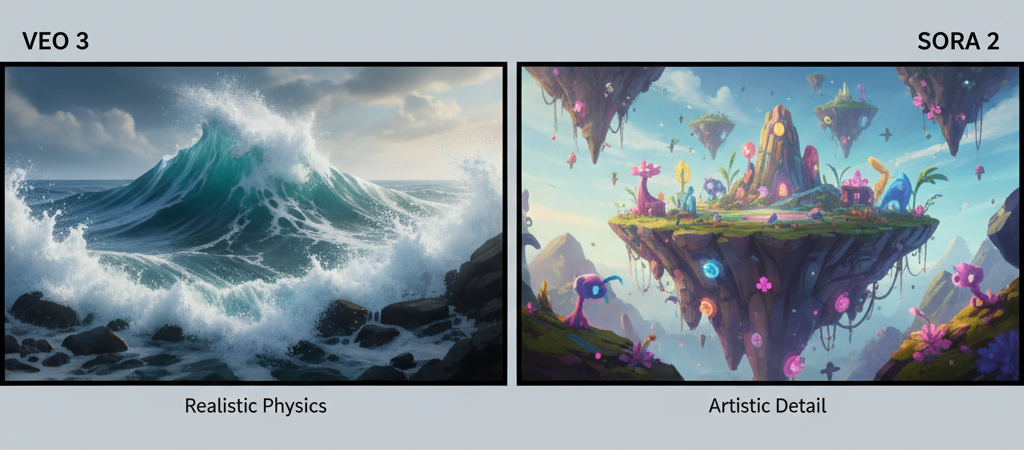
Veo 3 consistently produces outputs with a notably cinematic quality. Its strengths lie in exceptional motion handling movements feel fluid, natural, and adhere more reliably to real-world physics. The model demonstrates a superior understanding of lighting, texture, and depth, often generating clips that possess a tangible, filmic atmosphere. While not perfect, its shots exhibit strong compositional instincts, with fewer visual artifacts or “uncanny valley” distortions in human subjects compared to its predecessor. - OpenAI Sora 2: The Flexible Virtuoso
Sora 2’s visual output can be stunningly detailed and ambitious, capable of generating longer sequences and a wider variety of artistic styles, from photorealistic to animated. It sometimes produces individual frames of breathtaking beauty. However, its consistency is the challenge. Videos can occasionally suffer from temporal glitches, sudden perspective shifts, or issues with object permanence. Its strength is in creative exploration and longer narrative snippets, but it requires more selective curation to find the flawless clip.
Round 2: The Audio Revolution and Multi-Modal Integration
This is where the competition diverges most dramatically. Audio is no longer an afterthought; it is a fundamental component of the experience.
- Veo 3’s Defining Advantage: Google’s model made headlines by being the first to integrate fully synchronized, AI-generated audio directly from the text prompt. This isn’t merely adding stock sound effects. It’s a complex audio generation model that creates a logical soundscape matching the visual action the roar of a generated dragon syncs with its movement, the ambiance of a forest scene includes appropriate wind and wildlife. This creates a profoundly more immersive and usable asset straight out of the box.
- Sora 2’s Current Limitation: As of this testing, Sora 2 generates silent video clips. Audio must be added in post-production using separate tools. This adds a significant step to the workflow for creators seeking finished pieces and places it at a distinct disadvantage for projects requiring integrated sound design.
Round 3: Usability, Speed, and Practical Workflow
For professionals, theoretical capability must translate to practical efficiency.
- Processing Speed & Access: Veo 3, integrated into Google’s AI Test Kitchen and soon other products, generally offers faster turnaround times on generated clips. Sora 2, while currently free and accessible via a research preview, can have longer wait times and is subject to more stringent content filters, which can be a bottleneck for rapid iteration.
- Control and Iteration: Both platforms allow for some prompt refinement, but Veo 3 benefits from Google’s “Director’s Mode” hints, allowing slightly more control over shot composition and style. Sora 2 relies more heavily on the artistry of the text prompt itself.
The Strategic Decision Matrix: Which Tool is Right for Your Project?
Choosing a winner isn’t absolute; it’s about matching the tool to the task. The following breakdown clarifies the ideal use case for each model.
| Choose Google Veo 3 If Your Priority Is… | Choose OpenAI Sora 2 If Your Priority Is… |
|---|---|
| Polished, “Ready-to-Use” Clips: You need high-quality, short videos with integrated audio for social media, ads, or presentations. Cinematic Realism & Physics: Your projects demand natural motion, realistic lighting, and coherent scene physics. Workflow Speed & Reliability: You value consistent output quality and faster generation times for client work. Audio-Visual Harmony: Synchronized sound is a non-negotiable part of the final asset. | Creative Exploration & Experimentation: You are ideating, storyboarding, or exploring highly stylistic or surreal visual concepts. Longer Video Lengths & Narrative: You need longer continuous clips for experimental films or longer-form narrative prompts. Cost-Free Access: Budget is a primary constraint, and you can work with silent video to add audio later. Format Flexibility: You require specific aspect ratios or artistic styles that benefit from Sora’s broad training. |
The Verdict and the Horizon
After evaluating all dimensions, Google’s Veo 3 emerges as the current champion for professional and commercial applications. Its combination of superior and consistent visual polish, groundbreaking integrated audio, and faster, more reliable workflow provides a tangible advantage for creators who need a “final draft” quality output. It sets the benchmark for what a production-ready AI video tool looks like.
OpenAI’s Sora 2 remains a breathtakingly powerful and vital engine for creativity, especially for artists, researchers, and those pushing the boundaries of the medium. Its free access and capacity for ambition make it an indispensable tool in the ecosystem.
This is not the end of the race, but a decisive checkpoint. The competition is fueling exponential progress, and capabilities are evolving monthly. For now, Veo 3 holds a slight but clear lead in the practical march toward democratizing professional-grade video creation. The true winner, ultimately, is the global community of creators gaining access to these revolutionary tools.
Explore Steaktek for more updates.

