
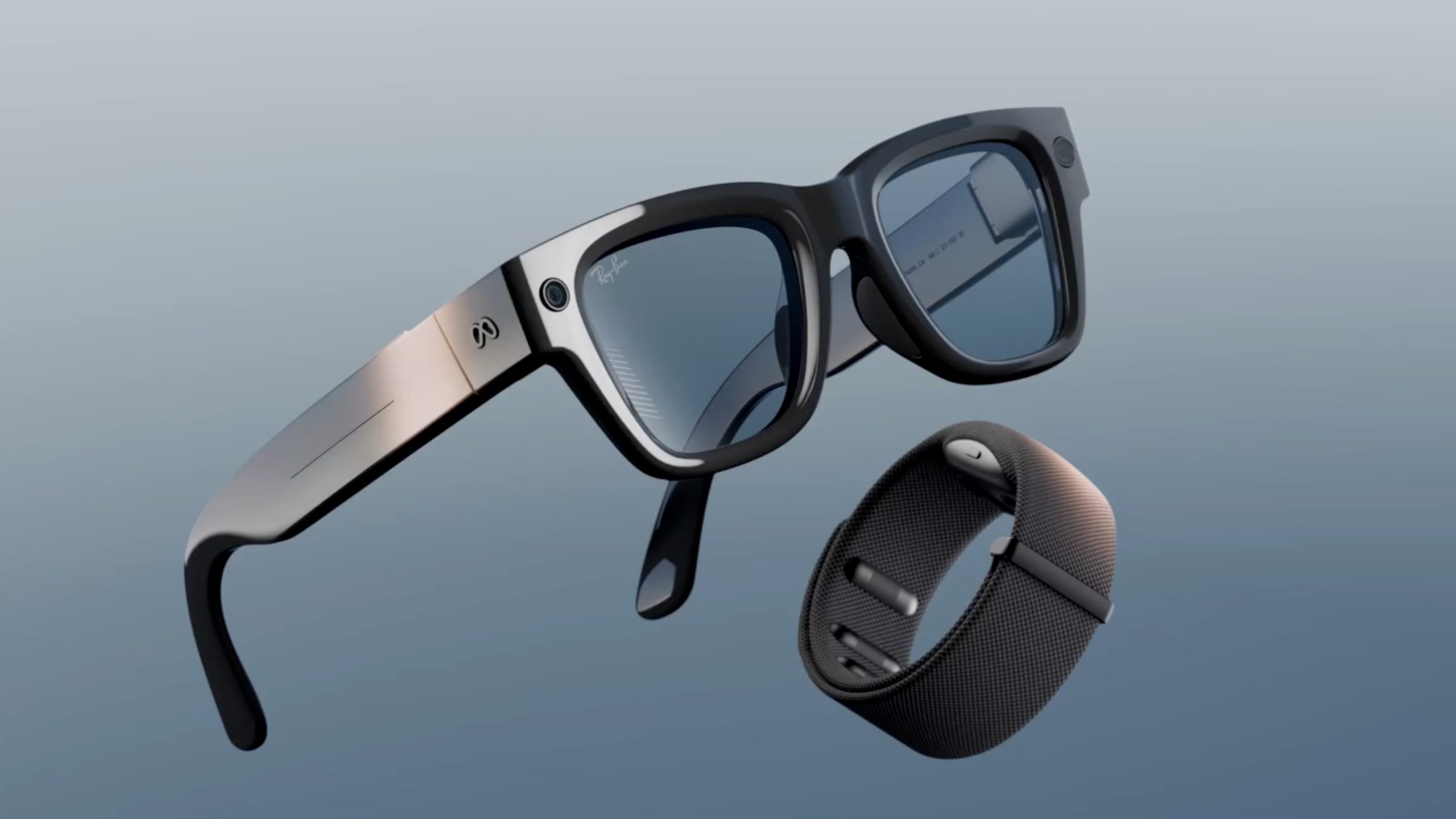
The vision of seamlessly interacting with our digital world through intuitive, natural gestures has taken a significant step forward. Meta has begun rolling out a groundbreaking early-access feature for its Ray-Ban Meta smart glasses paired with the accompanying neural interface wristband: the ability to write messages by simply tracing letters with your finger on any surface, including your own leg. This “air writing” capability moves beyond voice commands and basic gestures, offering a discreet. Text-based input method that fulfills a long-promised aspect of wearable, augmented reality (AR) interaction. While currently limited in scope, the feature represents a tangible leap toward a future where our bodies and the environment become the interface.
How It Works: From Finger Tracing to Sent Message
The technology leverages the combined sensors of the two devices. The neural band uses electromyography (EMG) to detect the subtle electrical signals in your forearm muscles as your fingers move, interpreting the intended shapes of letters. The smart glasses’ cameras and inertial measurement units (IMUs) provide additional spatial context to refine the input. The result is a system that can recognize handwriting in real-time as you “write” on a table, your thigh, or even in the air, converting those motions into digital text for messages.
- The User Experience: To respond to a message notification in the glasses’ display. A user can now choose the new handwriting option instead of voice dictation. They would then use their index finger to physically trace out words on a convenient surface. The transcribed text appears in the glasses’ viewfinder for confirmation before sending.
- Current Limitations: As an early-access feature, it is understandably constrained. It only supports English language recognition and works exclusively within Meta’s Messenger and WhatsApp apps. The accuracy and speed with which it interprets messy or cursive handwriting in real-world conditions remain key questions for users.
Strategic Context: Building a Multimodal AR Interface
This update is part of a broader suite of enhancements for the Ray-Ban Meta glasses. Which also now include a teleprompter mode for content creators and expanded pedestrian navigation in 32 U.S. cities. The handwriting feature is not intended to replace voice input which remains the fastest and most hands-free method but to supplement it, providing a silent, private alternative for use in meetings. Loud environments, or situations where speaking aloud is impractical.
Meta CTO Andrew Bosworth hinted that even more advanced input, like “magic air-typing” on an invisible keyboard, is being researched. The handwriting recognition is a foundational step in that direction, training both the AI models and user behavior for more sophisticated spatial interactions.
The Broader Ecosystem: A Glimpse into an Integrated Future
The announcement was paired with another proof-of-concept demo: a smart car integration with Garmin. This suggests Meta’s ambition to make its glasses and neural interface a central hub not just for personal communication, but for contextual control across environments—from writing a quick reply on your jeans to adjusting your car’s navigation or music via glance and gesture while keeping your hands on the wheel.
Market Realities: A U.S.-Focused Rollout Amid Supply Constraints
A sobering note for international tech enthusiasts: Meta has paused the international release of the new Ray-Ban Meta glasses, citing “extremely limited inventory” and long U.S. waiting lists. This means the novel handwriting feature, and the glasses required for it, will remain a North American experience for the foreseeable future, highlighting the supply chain and production challenges even for a tech giant.
Analysis: A Meaningful Step, But a Niche Audience
The handwriting feature is a genuine technical achievement that makes a sci-fi concept a usable, if beta, reality. It demonstrates the unique potential of combining neural sensing with optical AR displays.
| The Promise & Potential | The Practical Hurdles |
|---|---|
| Discreet, Silent Input: Enables private communication in public or quiet settings where voice is inappropriate. | Niche Hardware Requirement: Requires owning both the $300+ glasses and the separate neural band (pricing and full release TBA). |
| Expanded Input Modality: Adds a text-based option to a voice-first device, accommodating user preference and situational need. | Learning Curve & Accuracy: Users must adapt to “writing” without visual feedback on the writing surface; accuracy for poor handwriting is untested. |
| Foundation for Future Interfaces: Serves as a testbed for more complex gesture and spatial typing systems. | Limited App & Language Support: Confined to two Meta-owned apps and English, drastically reducing current utility. |
| Contextual Versatility: Can be used on any surface, increasing adaptability over a fixed virtual keyboard. | Social Acceptance: The act of writing on one’s own clothing in public may draw curious or awkward stares. |
Writing the Next Chapter of Wearable Input
Meta’s rollout of handwriting recognition for its smart glasses is more than a feature update; it’s a statement of direction. It confirms the company’s commitment to developing the neural band as a serious input device and pushes the Ray-Ban Meta glasses further beyond being “just” cameras and speakers on your face. While the immediate impact will be limited to early adopters in the U.S. with a specific hardware setup, its significance lies in the path it charts. It makes the futuristic idea of using the world as your keyboard just a little less fictional, proving that sometimes, the most advanced technology lets you do something as simple as writing a note on your pants.
Explore Steaktek for more updates.

