
The promise of productivity as a catalyst (AI – artificial intelligence) has gone from speculative fiction to daily fact. At the moment, professionals in industries are offered with one essential desire: Which AI assistant will definitely advance painting output? It dominates two verbal exchange platforms: OpenAI’s ChatGPT and Google’s Gemini. While both boast incredible talents, a floor-to-stage comparison misses a lot of the subtle ways that they combine well into an expert workflow. This massive assessment goes beyond fundamental feature lists to a rigorous, multifaceted assessment. We will look at their performance in moderate productivity areas from strategic planning to complex writing to fact synthesis and special responsibilities to decide which tool, or set of tools, definitely offers the promise of a streamlined, improved workday.
Understanding the Modern AI Productivity Landscape
The concept of “productivity tools” is basically better. Now it doesn’t generally manage a calendar or enterprise catalog. It’s about being an astute partner who can capture context, generate unique fabrics, and provide strategic insights. Modern AI assistants are judged on their ability to reduce cognitive load, accelerate popularity, and thoroughly enhance desire formation. This shift puts AI within the top class for reasoning ability, knowledge of consumer intent, and adaptability to particular enterprise contexts Ultimate fee parlor consciousnesses not lie in manifests. Yet being an unbroken extension of a person’s personal cognitive technique, reliably complements human intelligence.
Defining the Parameters of a Fair Comparison
To make a target assessment certain, this analysis depends around real-world business situations. The valuation is designed to reflect common, exorbitant tariff obligations in which AI intervention can shop up huge amounts of time or improve production penalties. Each tool varied given the same activations and inputs. The overall performance judged on several axes: depth of perception delivered, practicality and efficiency of its output, ability to genuinely structure facts. The overall person experience throughout interaction should be sought.
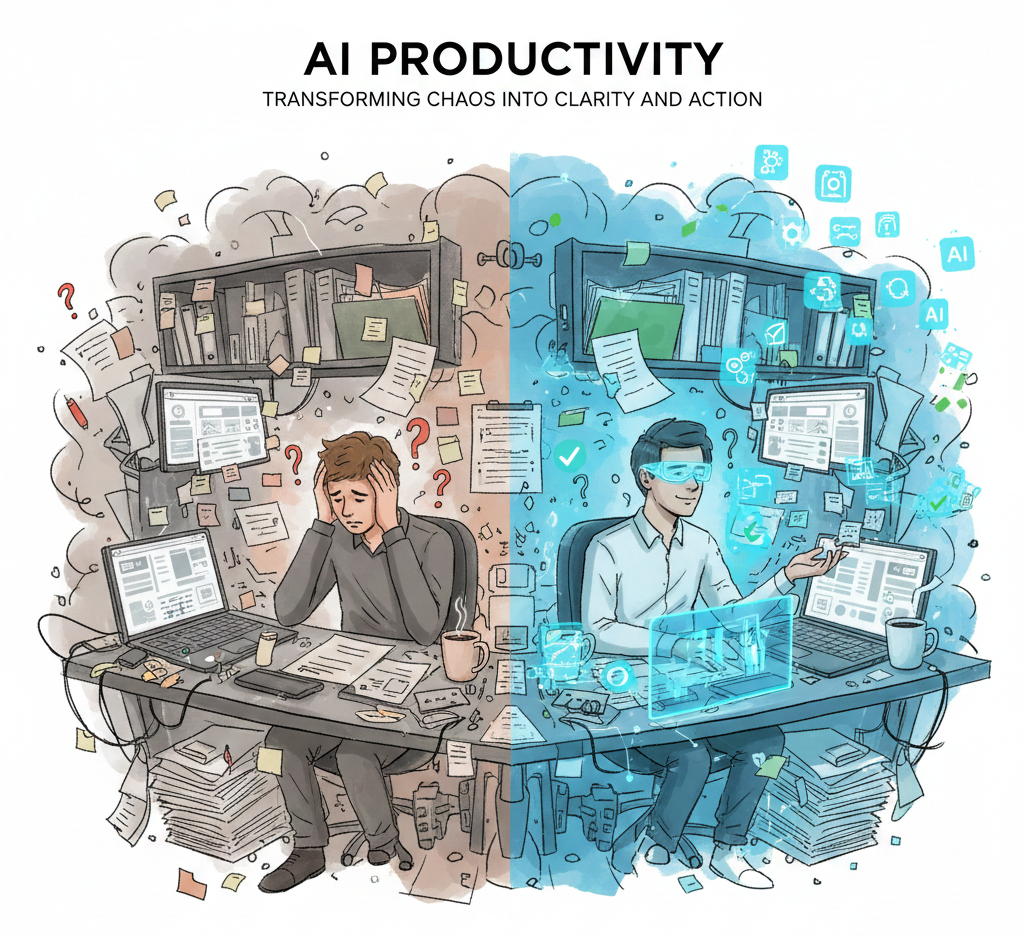
Core Function 1: Strategic Planning and Daily Workflow Architecture
The foundation of business productivity is effective planning. The first test requested a plan based on a complex workday filled with several tasks intensive analytical work, conferences, innovative brainstorming, and administrative responsibilities.
- ChatGPT’s Approach: ChatGPT responded with an overwhelmingly methodical framework. This generated without delay a template that expressed time blocking. Creating priority tagging based on the Eisenhower matrix, and recommendations for aligning tasks with herb electrode levels The output was a well-equipped to put in force system, complete with a sample log format. It requested the easiest to clarify questions about tenure and cut-off dates by offering this structure, focusing on refining an already strong motivation. It is consistent with proven productivity philosophies, and now supplies not just a list, but a teachable methodology.
- Gemini’s Approach: Gemini adopted a more conversational, question-first strategy. It began by using an inquiry approximately the user’s preferred scheduling style. Current pain causes, or even goals beyond the immediate agenda. The very last of this plan felt extra personal and narrative, weaving the duties right into a story-like waft for the day. But it lacked the immediate, concrete structure every now and then that a person under time stress would likely want to grasp and execute.
Analysis: For customers who want a fixed, systematic framework for imposing order on chaos, ChatGPT presents excellent instant software. Its strength lies in its use of accepted productivity fashions. Gemini, on the other hand, excels in the discovery department, perhaps helping a user who is unsure of their priorities to define them through speak through speaking them. While ChatGPT takes the lead for creating established plans, Gemini’s investigative fashion is valuable in less described events.
Core Function 2: Writing, Editing, and Content Creation
The role of AI in this area is examined as a creative and editorial collaborator. The venture was twofold: first, to publish a technical blog to help refine the draft, and 2d, to generate a marketing e-mail from a set of bulletin boards.
- ChatGPT’s Editorial Style: When criticizing the draft, ChatGPT often gave sweeping, on-line feedback. Opportunity statements, flagging passive voices, and structural modifications can also be advised. Even when correct, his comments may often have overly methodical sentiments, leaning closer to rewriting sentences rather than educating the writer on standards. In generating content, it produced polished, consistent, and beautifully adherent copy that came together reliably fast.
- Gemini’s Editorial Style: Gemini tended to work at a higher altitude. Instead of editing the line, it would discover overarching problems: “The argument in paragraph 3 wants stronger evidence,”. “The findings don’t quite eliminate the stress brought into the lead.” Worked more as a strategic editor, focusing on the “why” behind the writing. His output in era responsibilities could be extra numerous and sometimes more creative, but on occasion more generation was needed to shape a distinctive voice.
Analysis: This circular reveals a fundamental philosophical distinction. ChatGPT is an effective handheld copy-editor and a reliable content generator. Gemini strives to be a conceptual editorial associate. ChatGPT is more green for the writer who wants direct debugging and a stable first draft. For an expert writer looking for high-degree concept annotations, Gemini’s method of improving his painting can be more intellectually stimulating and much less intrusive.
Core Function 3: Information Synthesis and Analysis
A crucial productivity use case is distillation which means from dense statistics. We tested this at length, by supplying an assembly transcript and asking for precise with searches for clean moving objects.
- ChatGPT’s Synthesis: ChatGPT started a masterclass as a full summary. She produced a carefully prepared report with key options, discussion factors, debatable issues, and a clear, proprietary table of action items and excelled at extracting discrete facts and commitments. To create an ideal document to share with meeting attendees as a valid document.
- Gemini’s Synthesis: The summary of the Gemini was more explanatory. I tried to read between the traces, revealing contradictions of ability, underlying assumptions and unquestioned. His action items were framed within strategic goals. However, in its campaign to provide assessments, it did occasionally overlook a small yet solid point that ChatGPT reliably took into account.
Analysis: ChatGPT is unmatched in producing an official, authentic record of activities. Gemini offers a special charge for reconstructing the transcript of a meeting itself in a strategic report that explores deeper meaning and aligns results with desires. The desire rests on the synthesis goal: documentation versus approach components.
Weighing the Strategic Fit: A Tool for Your Specific Needs
Choosing the right AI is less predictably an established winner and more predictably matching the core strength of the tool for your primary workflow demanding situations. The following table breaks down the decision matrix.
| Optimal Use Cases for ChatGPT | Optimal Use Cases for Gemini |
|---|---|
| Structured Output & Systems: Creating templates, systematic plans, standardized files, and how-to guides for specials. | Brainstorming & Ideation: Exploring standards, debating ideas, and producing innovative or unconventional solutions |
| Comprehensive Summarization: Produce real-dense reapplications Meetings, reports, or research that lack details are of high value. | Strategic Editing & High-Level Feedback: Get conceptual reviews on files, shows, or arguments to improve moderate messaging Required. |
| Reliable First-Draft Generation: Need polished, “ready-to-use” reproduction for email, content, or code with minimal revisions. | Learning & Explanation: Understand complex topics through interactive questions and answers, with strong reasoning behind solutions. |
| Technical Tasks & Coding: They can begin to explain technical strategies with debugging, writing code snippets, or hook up, step-by-step use-by-step logic. | Personalized Planning: Developing a customized framework through communication, primarily when dreams begin with a vague or exploratory one. |
Emerging Frontiers: Coding, Creativity, and Continuous Learning
Beyond the productivity of the middle, each tool is developed in specialized regions. In terms of coding responsibilities, ChatGPT exhibits deeper context retention within a largely verbal exchange, making it stronger for repetitive debugging. Included with Google’s surroundings, Gemini can sometimes take advantage of new records more efficiently. For creative indulgences each can generate poems, stories, or campaign ideas, with ChatGPT favoring narrative engagement and Gemini regularly providing additional sudden new leaps. The pace of development is relentless. The “first-class” tool for a particular niche characteristic can alternate with each model replacement, underscoring the value of each access.
The Human Factor: Usability, Interface, and Learning Curve
The productivity gain can be nullified through a messy interface. ChatGPT’s interface is easy to use and the conversation thread is targeted. Gemini, especially within Gemini Advanced or Workspace integration, emphasizes connectivity with different Google tools like Docs, Gmail, Drive. Undoubtedly developing smoother workflows for already users in that setting Both with thought-chain prompting unlock the authentic potential of the tool.
Perspective:
After using both structures extensively for months, I went from finding one “winner” to cultivating strategic partnerships with each. My workflow now easily navigates responsibilities based entirely on the required cognitive form. When I need file based, process codified, or carefully summarized dense textual content, I turn to ChatGPT. It is characterized as a remarkable, tireless executive assistant who excels in business enterprise and clean execution. When I’m stuck on a conceptual problem, need to stress-test a concept, or want to be challenged on the platform that underpins my writing, my interaction is Gemini. It feels more like a collaborative ideas collaborative, occasionally frustratingly indirect yet frequently brilliantly insightful. The real productivity step was not choosing the next one, but gaining knowledge of each unique “accent” and therefore assigning images. The opposition among them is what drives this first-class innovation forward, and the customers and we are the closing beneficiaries.
Future Outlook: Integration and the Evolving Workspace
The future of AI productivity consists of deeper, additional environmental integration. We shift from the gear we question to the structures we participate in. Imagine an AI that robotically drafts emails based solely on the accuracy of a constructed meeting, or one that preps a briefing doc through synthesizing information from your organization’s cloud storage that asks you too. ChatGPT’s partnership with Microsoft and Gemini’s native proximity to Google Workspace are the initial steps towards this seamless future. Subsequently the battlefield must not be merely raw capabilities. However which allow AI to maximize easily and reliably insert itself into the digital content of our every day images.
Final Synthesis: Choosing Your Intelligent Partner
The decision is subtle. For experts whose productivity is defined through structure, readability, and reliable execution. Enterprise managers, coders, content content creators ChatGPT currently provides additional consistently powerful and actionable toolkits its propensity to generate dependable, instant, and realistic output makes it a robust productivity engine.
However, Gemini offers a compelling, intellectually stimulating opportunity for roles driven through strategy, innovation, conceptual insight specialists, marketers, researchers and senior head. Its potential for high-level reasoning and exploratory negotiation can unleash new perspectives.
The most productive specialists probably won’t restrict themselves now. The strategic use of each, leveraging ChatGPT for execution, and Gemini for ideation and strategic review, could also represent a true modern day in augmented productivity The question is not which AI is better, but which is better in the hands of the initiative. Mastering that discernment is the real key to unlocking the subsequent phase of expert efficiency and creativity.
Explore Steaktek for more updates.

 as a productivity catalyst has moved from speculative fiction to daily reality. Professional...)